Wednesday, February 22, 2006

Epic Trail Run

Heidi and I are enjoying a visit with friends in Colorado Springs. This morning I had considered climbing Pike's Peak, but sanity convinced me otherwise (high winds and closed roads also helped convince me).

Instead I opted for a scenic trail run. I found a running club here that specializes in these kinds of runs, and decided to do the extended Rampart Range Road run. Their website has nice maps and trail descriptions.

So I started off making my way from Manitou Springs down the road into The Garden of the Gods. The sun was shining and it was crisp 20 degrees F. From there I began the long climb to the top of Rampart Range road. At about 7000 feet (the run begins at 6200), the road became solid snow, but not icy.

Around that time it occurred to me that I should have brought some water. Perhaps even some food. I had already been running for 75 minutes. Oh well, I thought, as I continued on.

Once at 8000 feet I turned onto a single track trail that wound its way through a canyon of red rocks and even an old mine.

After 2 hours, the run started feeling "long" -- a combination of altitude, HILLS, lack of fitness, and a lack of water - -all began to feel evident.

I was thankful for the two old(er) ladies I passed near the Waldo Canyon Trailhead -- I stopped them and asked if I could have some water. They happily obliged and I enjoyed every ounce (I drank about 8 ounces).

Not long after that came the highway crossing, more snowcovered hills, and the long trip back on the Ute Pass Trail. I made it to the finish after running for 3 hours. It was a beautiful trail run, with great views of the Springs and Pike's Peak.

Once back in town I stumbled into an Espresso Shop for water, two slices of bread, and a latte.

I think I had more fun than if I had tried to climb Pike's Peak.

A wonderful Scripture came to mind as I prayed and viewed the surrounding majesty:

"He who forms the mountains,
creates the wind,
and reveals his thoughts to man,
he who turns dawn to darkness,
and treads the high places of the earth --
the Lord God Almighty is his name."
Amos 4:13

Friday, February 17, 2006

The Prayer of Jabez Falls Short in Africa

This article is from Sojourners magazine-on-line. It has recently created a lively missions discussion through some emails among missions minded people. Feel free to comment.

The Prayer of Jabez falls short in Africa
by David Batstone


Bruce Wilkinson, author of the best-selling book The Prayer of Jabez, made a big splash nearly four years ago when he announced his ambitious plan to help children suffering from AIDS in Africa.

Not everything for Wilkinson has gone according to plan, unfortunately. A page one feature in the Dec. 19 The Wall Street Journal captures the sad tale in a nutshell: "In 2002 Bruce Wilkinson, a Georgia preacher whose self-help prayer book had made him a rich man, heard God's call, moved to Africa and announced his intention to save one million children left orphaned by the AIDS epidemic. In October [2005], Wilkinson resigned in a huff from the African charity he founded. He abandoned his plan to house 10,000 children in a facility that was to be an orphanage, bed-and-breakfast, game reserve, Bible college, industrial park and Disneyesque tourist destination in the tiny kingdom of Swaziland. What happened in between is a story of grand hopes and inexperience, divine inspiration and human foibles. His departure left critics convinced he was just another in a long parade of outsiders who have come to Africa making big promises and quit the continent when local people didn't bend to their will."

It is not my aim to gloat at Wilkinson's failure. To the contrary, I mourn what this means for the millions of African children in crisis who apparently will not benefit from his efforts. I also want to honor Wilkinson's desire to help the least fortunate. It would have been easy for him to take the wealth he gained from his book sales and live a life of personal comfort.

This chain of events, however, should not pass without a moment of theological reflection. The "blessed life" that Wilkinson has helped to promote carries with it a number of assumptions about where God is present in the world, and how God acts in response to the prayers of the faithful.

The Prayer of Jabez is based on a passage out of the book of Chronicles, in which a devoted man named Jabez asks God for a favor: "Oh that you would bless me and enlarge my border, and that your hand might be with me, and that you would keep me from hurt and harm!" The fact that God honors Jabez' prayer and blesses him with great riches indicates to Wilkinson a God-principle. If we in pure heart ask God for a blessing - and do so using the very words that Jabez prayed - then God will bring wondrous gifts into our life. As The Wall Street Journal reports, Wilkinson interprets the wild commercial success of his books (roughly 20 million copies sold combined) as yet another proof of the miraculous power of the Jabez prayer. In other words, it worked for Jabez, it worked for Wilkinson, and now it should work for you. With the fiasco in Africa now behind him - and the full Journal report makes clear that fiasco is the appropriate term - I wonder if Wilkinson has reconsidered his theology.
Maybe because I spent so many years in poor regions of the globe I could never accept the prayer-in-blessing-out approach to faithful living. Straight to the point, I have known too many devoted Christians for whom life did not bring them material blessing. Their children still died of infectious diseases that plagued their village. They could not avoid the violence that dictators and ideologues so often use to cow the powerless. Their territory did not expand because their only path for survival was a daily labor with their hands. Yet they did not lose faith, or cease praying for God's blessing.

As I ponder on their lives, I find a more fitting theology for God's presence and action in the world to be laid out in the book of Hebrews. There we are encouraged to have "faith in things not yet seen," and are offered models of individuals who tried to lead devoted lives that honor God. We read that some of them did receive great material blessings, while others ended up in the dens of lions or stoned due to their principled living. We learn, in other words, that God does hear their prayers and loves them profoundly, but it does not always bring them material riches or expanded territory.

Wilkinson's doctrine in fact implies that social structures are immaterial. An individual reciting the right prayer can transcend an AIDS epidemic in his or her village or escape being bought and sold into slavery (like 27 million people on this planet yet today). Perhaps now that Wilkinson has immersed himself in Africa, he better understands that the curse of poverty is not a spiritual punishment, or an indication of a lack of faith. To bring blessings to the orphans and widows of Africa, a dramatic shift in values - political, economic, and personal - will be required. And that challenge cannot be owned by Africans alone; it falls squarely on the shoulders of us in rich nations, who enjoy such great material "blessings."

Just like the next Bible reader, I could pick out individual passages that seem to suggest that God will give us whatever we desire as long as we ask for it with a pure heart. "You can even move this mountain" with such a prayer, as Jesus teaches his disciples in the gospels. I do not summarily discount these passages, nor do I assume that we should never pray for rain in a time of drought.

But the weight of the biblical message balances heavily toward a prayer life that yields courage, love, and compassion to do the will of God. The expectation of material gain and miraculous blessings may even distract us on that pilgrimage. The passage in Hebrews calls us, based on past heroes of the faith, "to run the race in front of us," confident that devoting our lives to God's work is all the reward we will ever need.

Wednesday, February 15, 2006

Complete Notes: School of the Bible -- Bible Study Methods and Covenant

School of the Bible
An Introduction to the Bible
Week 3: Bible Study Methods/Covenant – The Basis of the Old and New Testaments
Matt Messner
February 15, 2006
Click http://www.eastsidechurch.org/ministries/discipleship.asp for Power Point and handouts.


Bible Study Methods

2 Timothy 3:16-17
16All Scripture is God-breathed and is useful for teaching, rebuking, correcting and training in righteousness, 17so that the man of God may be thoroughly equipped for every good work.

Christians have traditionally been called “people of the Book.” The value of Bible study cannot be underestimated. Historically, revival has usually gone hand and hand with a passionate love for Scripture and its appropriate application to one’s life – whether we look at the Reformation (sola Scriptura), the Charismatic renewal, missions movements, etc.

This means that at the center of the spiritual life of Christians is a precious written document that contains a treasury of sacred wisdom and the core of its revelation. We also believe that Scripture contains all things necessary for salvation. Therefore as followers of Jesus Christ it is our sacred duty to be students of the Scripture.
All that I need to be all that He has created me to be, is found in here.

Some say the Bible is a mysterious book, open to countless interpretations, difficult to read, impossible to understand, and full of secrets. Others treat the Bible in the opposite way – picking it up and reading it in the same way they would peruse a novel or a newspaper. These would claim that if you read, you’ll have no trouble with the Bible.

The problem with the first view is that it assumes that the Bible was never written for ordinary people – the view that Scripture is a “mysterious book”. This is a great mistake. In spite of the fact that the Bible addresses different specific groups of people, it has the overall purpose of addressing all human being – regardless of the education or their culture. The audiences of the books of the Bible included illiterate and uneducated people.

The problem with the second view is that the Bible is not just a simple book. It is a library in and of itself. It was first written to very different people in a very different time. It contains many different types of literature. It was written for a different purpose than the paper or a novel. It has many purposes, the main task which is to transform the spiritual nature of human beings. It is an amazing book that we can make the object, quest of our study and personal growth.

I personally have devoted my life to it. I love it so much.

So Bible study is a necessary obligation and a sacred responsibility for those who take their faith seriously.

Many questions arise as to how to study the Bible:
1. How is it to be approached?
2. With what attitudes should we come?
3. What tools should we bring?
4. What methods can be used to enrich our study?
5. What results can we expect from our study?

Approach:
Confidence that this is something you should do. God has something to say to you through this book.
Patience: You will never stop learning when you pick up this book.
Prayer: Pastor Jim taught on this last week.
A desire to apply

Attitude:
Teachability and openness
Awareness of bias
Hunger and thirst for truth (expectant)
A willingness to let the HS teach us.
An allowance for ambiguity (the willingness to let issues remain undecided until we have more information or a better understanding. Don’t jump to conclusions to quickly.
Faithfulness

Tools and Preparation:
Bible
Concordance: An index of the words of the Bible
Commentaries
Lexical aids
Writing Pad

6 Methods of Bible Study:
Topical Study
This is often the method that is used when a person works with a concordance.
While doing a topical study you will notice how different genres of Scripture address themes and topics differently, and some are the same. Listening to sermons/reading books on Christian living
The Application Method
Reading Scripture (Oral reading, prayerful reading for Spiritual Growth)
The Holy Spirit Approach
Exegetical Study
Looks at a particular book or passage and tries to understand it within the framework or context in which it was written. Immediate context: Understanding what exactly was being said and why. Who was the author and why was he writing? What was taking place then that influenced this writing? Then, what are the implications of that exact same truth, today? What is the central meaning of each unit of thought?
Augustine: “When the Bible speaks, God speaks.”

The Joy of Discovery Chart
What are you looking for during observation?
Complete units of thought
Identify the type of literature
Key words
Key characters
Details that are listed
Context
Questions that arise
Grammatical aspects: tone, verbs, nouns, adjectives
Atmosphere

When studying narrative literature, ascertain the answers to the questions of who, what, when, where, how and why?
These are six important questions. Also, try to get a sense of the plot and the unfolding of the scenes.
What was the purpose of the author?
For whom was it written?
What are the local truths, and the general truths?
How does this tie into the rest of Scripture?
How objective are you being?

What is the main point?! (What is the central idea?)

For further reading may I recommend the following:

Wald, Oletta. The New Joy of Discovery in Bible Study. Augsburg Fortress, 2002.

Fee, Gordon and Stuart, Douglas. How to Read the Bible for all Its Worth. Zondervan, 1993.

Covenant

Studying the covenants of Scripture allows us a way to trace the revelation of God in its chronological and historical sequence. As we do this I believe we will be able to inductively identify a focal point or an organizing center, of the Old Testament, that provides us with an overall, organizing center.

Covenant: A promise or agreement made between two parties binding them together to some agreed upon obligations and benefits.

The Hebrew word for covenant (berith) and the Greek word for covenant (diatheke), were both translated into Latin as testamentum, from which we have the English – testament.
Old Covenant/New Covenant = Old Testament/New Testament

This center of the Old Testament is what the NT calls the “promise” – epangelia (Gk). The OT described this promise in many different ways, the primary way of which was through the various covenants.

In 40 passages, through half the books of the NT, the word “promise” is used to describe the OT message. When looking at covenants, you’re looking into the center of the Old Testament message.

Literally, the verb “to make a covenant” is “to cut a covenant”. Thus when one made a covenant several animals were brought in, cut in half and arranged opposite of each other. The person or parties making the covenant would then walk through the aisle formed by the carcasses and say in effect, “May it happen to me as it has happened to these slain animals if I do not keep all the requirements of this covenant.”

Jeremiah 34:18-20 “The men who have violated my covenant and have not fulfilled the terms of the covenant they made before me, I will treat like the calf they cut in two and then walked between its pieces…”

The history of salvation can be clearly traced by noting both the presence and the contents of the covenants of Scripture.

The study of the covenants of the Bible will trace a clear, unifying line that outlines the unfolding of God redemptive plan while also showing how He has had the same thing in mind for His people ever since the beginning.

Two Types of Covenant: Covenants may be either bilateral (two-sided – where both parties are obligated) or unilateral (where only one party is bound by the agreement).

Bilateral: (Conditional) In a bilateral covenant if one of the parties defaulted in their oath, the other was released from any further obligations. An example of this is the Sinai covenant (Exodus 19:5-6, 24:3 (Now if you obey me fully and keep my covenant, then out of all nations you will be my treasured possession. Although the whole earth is mine, you will be for me a kingdom of priests and a holy nation.…When Moses went and told the people all the Lord’s words and laws, they responded with one voice, “Everything the Lord has said we will do.”)

Unilateral (Unconditional) In a unilateral covenant only one party is bound to keep the oath, and it is not conditional or dependant on the actions of the other party. Genesis 15:9-21 is an example of this. [“Abram cut them in two and arranged the halves opposite each other…when the sun had set and darkness had fallen a smoking firepot with a blazing torch appeared and passed between the pieces. On that day the Lord made a covenant with Abram...and said I will give you the land…”] In this covenant, God is pictured as the only One who walks between the pieces and thus obligates Himself alone to bring all the blessings and benefits of which He speaks. God’s blessings were apart from any works of obedience on the part of Abraham or any of the patriarchs who followed him who also enjoyed the benefits of this covenant.

Covenant Enforcement
God keeps His covenants, and therefore when His covenant was broken, the later prophets often placed Israel on trial for failure to fulfill their covenant commitments (Jeremiah 11:10; Ezekiel 16:59; Hosea 8:1).

During times of revival they people of Israel would renew their covenant commitments to God (Deut. 5:2-3; Joshua 24, 2 Kings 23:3; 2 Chronicles 15:12)

The Primary Covenants
There are many more covenants but for the purposes of this introductory study we will take a moment to examine six of the major covenants of the Bible

Adamic Covenant:
Text: (Genesis 3:9-21)
Type: Unilateral
Theme: Ultimate Victory
A Seed
The Adamic Covenant can be thought of in two parts: the Edenic Covenant (innocence) and the Adamic Covenant (grace). The Edenic Covenant is found in Genesis 1:26-30; 2:16-17. The details of this covenant include:
· Mankind (male and female) created in God’s image.
· Mankind’s dominion (rule) over the animal kingdom.
· Divine directive for mankind to reproduce and inhabit the entire Earth.
· Mankind to be vegetarian (eating of meat established in the Noahic covenant: Genesis 9:3).
· Eating the fruit of the tree of the knowledge of good and evil forbidden (with death as the stated penalty).

The Adamic Covenant is found in Genesis 3:16-19. As the result of Adam’s sin the following curses were pronounced:
· Enmity (positive mutual hatred) between Satan and Eve and her descendants.
· Painful childbirth for women.
· Marital strife.
· The soil cursed.
· Introduction of thorns and thistles.
· Survival to be a struggle.
· Death introduced.
· Death will be the inescapable fate of all living things.

Although these curses are severe and inescapable, a wonderful promise of grace was also included in the Adamic Covenant. Genesis 3:15 is often referred to as the “Proto-Gospel” (protoeuangelion) or “First Gospel.” Speaking to Satan, God says: “And I will put enmity between you and the woman, and between your seed and her seed; He shall bruise you on the head, and you shall bruise him on the heel.”

Here God promises that one born of a woman be wounded in the process of destroying Satan. The “seed” of the woman who would crush the Serpent’s head is none other than Jesus Christ (see Galatians 4:4 and 1 John 3:8). Even in the midst of the curse, God’s graceful provision of salvation shines through.

The promise here in Genesis 3:15 is for a “he” – a representative person who would deliver a lethal blow to the head of Satan while the best the serpent would be able or permitted to do would be to bruise the heel of this male descendant.

Noahic Covenant
Text: (Genesis 9:9-17, 6:17-21)
Type: Unilateral
Theme: Preservation of life.
Symbol: Rainbow.

Abrahamic Covenant
Text: (Genesis 12, 15, 17)
Type: Unilateral
Theme: Land and descendants (An heir, and inheritance, a heritage)
Symbol/Sign: Circumcision
Read 15:18, 17:2,
Spoken to Isaac 26:3-5
Spoken to Jacob 28:13-15
Blessed to be a blessing…for the sake of the nations

The Abrahamic Covenant is an unconditional covenant. God made promises to Abraham that required nothing of Abraham. Genesis 15:18-21 describes a part of the Abrahamic Covenant, specifically dealing with the dimensions of the land God promised to Abraham and his descendants.

The actual Abrahamic Covenant is found in Genesis 12:1-3. The ceremony recorded in Genesis 15 indicates the unconditional nature of the covenant. The only time that both parties of a covenant would pass between the pieces of animals was when the fulfillment of the covenant was dependent upon both parties keeping commitments. Concerning the significance of God alone moving between the halves of the animals, it is to be noted that it is a smoking furnace and a flaming torch, representing God, not Abraham, which passed between the pieces. Such an act, it would seem should be shared by both parties, but in this case it is doubtless to be explained by the fact that the covenant is principally a promise by God. He is the one who binds Himself. God caused a sleep to fall upon Abraham so that he would not be able to pass between the two halves of the animals. Fulfillment of the covenant fell to God alone.

God determined to call out a special people for Himself through whom He would bring blessing to all the nations. The Abrahamic Covenant is paramount to a proper understanding of the kingdom concept and is foundational to Old Testament theology. (1) The Abrahamic Covenant is described in Genesis 12:1–3 and is an unconditional covenant.

There are three main features to the Abrahamic Covenant.
1. The promise of land (Genesis 12:1). (An inheritance) ”I will make you a great nation” God called Abraham from Ur of the Chaldees to a land that He would give him (Genesis 12:1). This promise is reiterated in Genesis 13:14–18 where it is confirmed by a shoe covenant; its dimensions are given in Genesis 15:18–21 (precluding any notion of this being fulfilled in heaven). The land aspect of the Abrahamic Covenant is also expanded in Deuteronomy 30:1–10, which is the Palestinian Covenant.

2. The promise of descendants (Genesis 12:2) (An heir). God promised Abraham that He would make a great nation out of him. Abraham, who was 75 years old and childless (Genesis 12:4), was promised many descendants. This promise is amplified in Genesis 17:6 where God promised that nations and kings would descend from the aged patriarch. This promise (which is expanded in the Davidic Covenant of 2 Samuel 7:12–16) would eventuate in the Davidic throne with Messiah’s kingdom rule over the Hebrew people. The ancient word about a seed is again revived and now directed to Abraham – Genesis 12:7. We now see that this promise was to include a great number.

3. The promise of blessing and redemption (Heritage) (Genesis 12:3). These promises where to be a source of blessing for all other peoples: God promised to bless Abraham and the families of the earth through him. This promise is amplified in the New Covenant (Jeremiah 31:31–34; cf. Hebrews 8:6–13) and has to do with “Israel’s spiritual blessing and redemption.” Jeremiah 31:34 anticipates the forgiveness of sin. The unconditional and eternal nature of the covenant is seen in that the covenant is reaffirmed to Isaac (Genesis 21:12; 26:3–4). The “I will” promises suggest the unconditional aspect of the covenant. The covenant is further confirmed to Jacob (Genesis 28:14–15). It is noteworthy that God reaffirmed these promises amid the sins of the patriarchs, which fact further emphasizes the unconditional nature of the Abrahamic Covenant.

God’s method of fulfilling the Abrahamic Covenant is literal, inasmuch as God partially fulfilled the covenant in history: God blessed Abraham by giving him the land (Genesis 13:14–17); God blessed him spiritually (Genesis 13:8, 18; 14:22, 23; 21:22); God gave him numerous descendants (Genesis 22:17; 49:3–28).

Mosaic Covenant
Text: (Exodus 19:5-6)
Type: Bilateral/Conditional
Theme: Obedience to the law
Symbol: The law and the Ark of the Covenant

“No if you obey me fully and keep my covenant, then out of all nations you will be my treasured possession. Although the whole earth is mine, you will be for me a kingdom of priests and a holy nation.” I will be your God, you will be my people, and you will be a kingdom of priests – mediators to the world.
The People of Promise
The Mosaic Covenant is a conditional covenant made between God and the nation of Israel at Mount Sinai (Exodus 19-24). It is sometimes called the Sinai Covenant but is more often referred to as the Mosaic Covenant since Moses was God’s chosen leader of Israel at that time. The pattern of the covenant is very similar to other ancient covenants of that time because it is between a sovereign King (God) and his people or subjects (Israel). At the time of the covenant God reminded the people of their obligation to be obedient to His law (Exodus 19:5) and the people agreed to the covenant when they said; “All that the Lord has spoken we will do!” (Exodus 19:8). This covenant would serve to set the nation of Israel apart from all other nations as God’s chosen people and was as equally binding as the unconditional covenant that God made with Abraham because it is also a blood covenant. The Mosaic Covenant is a significant covenant in both God’s redemptive history and in the history of the nation of Israel through whom God would sovereignly chose to bless the world with His Written Word and the Living Word, Jesus Christ.

The Mosaic covenant was centered around God giving His divine law to Moses on Mount Sinai. In understanding the different covenants in the Bible and their relationship with one another it is important to understand that the Mosaic Covenant differs significantly from the Abrahamic Covenant and later biblical covenants because it is conditional in that the blessings that God promises are directly related to Israel’s obedience to the Mosaic Law. If Israel is obedient then God will bless them, but if they disobey then God will punish them. The blessings and curses that are associated with this conditional covenant are found in detail in Deuteronomy 28. The other covenants found in the Bible were unilateral covenants of promise, in which God bound Himself to do what He promised, regardless of what the recipients of the promises might do. On the other hand the Mosaic Covenant is a bilateral agreement, which specifies the obligations of both parties to the covenant.

The Mosaic Covenant is especially significant because in it God promises to make Israel “a kingdom of priests and a holy nation.” (Exodus 19:6) Israel was to be God’s light to the dark world around them. They were to be a separate and called out nation so that everyone around them would know that they worshiped Yahweh, the covenant keeping God. It is significant because it is here that Israel received the Mosaic Law that was to be a schoolmaster pointing the way towards the coming of Christ. (Galatians 3:24-25) The Mosaic Law would reveal to people their sinfulness and their need for a Savior and it is the Mosaic Law that Christ Himself said that He did not come to abolish but to fulfill. This is an important point because some people get confused by thinking that keeping the Law saved people in the Old Testament, but the Bible is clear that salvation has always been by faith alone and the promise of salvation by faith that God had made to Abraham as part of the Abrahamic covenant still remained in effect (Galatians 3:16-18).

Also the sacrificial system of the Mosaic Covenant did not really take away sins (Hebrews 10:1-4), it simply foreshadowed the bearing of sin by Christ, the perfect high priest Who was also the perfect sacrifice (Hebrews 9:11-28). Therefore the Mosaic Covenant itself, with all its detailed laws, could not save people. It is not that there was any problem with the law itself, for the law is perfect and was given by a Holy God, but the law had no power to give people new life, and the people were not able to obey the law perfectly (Galatians 3:21).

The Mosaic Covenant is also referred to as the Old Covenant (2 Corinthians 3:14; Hebrews 8:6, 13) and was replaced by the New Covenant in Christ (Luke 22:20; 1 Corinthians 11:25; 2 Corinthians 3:6; Hebrews 8:8; 8:13; 9:15; 12:24). The New Covenant in Christ is far better than the old Mosaic Covenant that it replaces because it fulfills the promises made in Jeremiah 31:31-34 as quoted in Hebrews 8.

The efficacy of the OT sacrifices rested in the Word of God, which announced that with the right heart attitude, forgiveness would be granted by God. Of course, this depended on the perfect future payment which Christ would one day make. The blood of bulls and goats was not sufficient but the perfect sacrifice would objectively achieve what these former sacrifices subjectively were anticipating. Until Christ’s death, the sins of the OT saints were forgiven and passed over (Rom 3:25) in the merciful grace of God until Jesus did what not animal could ever do.
My people – A kingdom of priests – a holy nation – A place to dwell (tabernacle)

This completes the triad promise – I will be your God. You shall be my people. And I will dwell in the midst of you.

5. Davidic Covenant
Text: (2 Samuel 7)
Type: Unconditional
Theme: An Eternal King Preservation of David’s throne
“I will establish the throne of his kingdom forever” (vs. 13)
The King of Promise
The Davidic Covenant refers to God’s promises to David through Nathan the prophet and is found in 2 Samuel 7 and later summarized in 1 Chronicles 17:11-14 and 2 Chronicles 6:16. This is an unconditional covenant made between God and David where God promises David and Israel that the Messiah (Jesus Christ) would come from the lineage of David and the tribe of Judah and would establish a kingdom that would endure forever (2 Samuel 7:10-13). It is unconditional because God does not place any conditions of obedience upon its fulfillment. The surety of the promises made rests solely on God’s faithfulness and do not depend at all on David or Israel’s obedience.

This covenant centers on several key promises that are made to David. 1) God reaffirms the promise of the land that He made in the first two covenants with Israel (The Abrahamic and Mosaic Covenants). This promise is seen in 2 Samuel 7:10, “Moreover I will appoint a place for My people Israel, and will plant them, that they may dwell in a place of their own and move no more; nor shall the sons of wickedness oppress them anymore, as previously.” 2) God promises that David’s descendent or “seed” will succeed Him as king of Israel and that David’s throne will be established forever. This promise is seen in 2 Samuel 7:12-13, "I will set up your seed after you, who will come from your body, and I will establish his kingdom. He shall build a house for My name, and I will establish the throne of his kingdom forever.”

The provisions of the covenant are summarized in 2 Samuel 7:16, “And your house and your kingdom shall be established forever before you. Your throne shall be established forever." The promise that David’s “house”, “kingdom” and “throne” will be established forever are significant because they show that the Messiah will come from the lineage of David and that He will establish a kingdom from which He will reign. The covenant is summarized by the words “house,” promising a dynasty in the lineage of David; “kingdom,” referring to a people who are governed by a king; “throne,” emphasizing the authority of the king’s rule; and “forever,” emphasizing the eternal and unconditional nature of this promise to David and Israel.
A place for God to dwell… A house
A king who would reign…a seed
A Kingdom
A Son of God – 2 Samuel 7:14

6. New Covenant (Jeremiah 31:31-34) Forgiveness and the law written on the hearts of His people.
31 "The time is coming," declares the LORD, "when I will make a new covenant with the house of Israel and with the house of Judah.
32 It will not be like the covenant I made with their forefathers when I took them by the hand to lead them out of Egypt, because they broke my covenant, though I was a husband to them, " declares the LORD.
33 "This is the covenant I will make with the house of Israel after that time," declares the LORD. "I will put my law in their minds and write it on their hearts. I will be their God, and they will be my people.
34 No longer will a man teach his neighbor, or a man his brother, saying, 'Know the LORD,' because they will all know me, from the least of them to the greatest," declares the LORD. "For I will forgive their wickedness and will remember their sins no more."

So when Jesus was sharing the Passover meal with His disciples and they were reflecting on Exodus 24:8 where Moses seals the Mosaic covenant my pouring half of the “blood of the covenant” upon the altar and after sprinkling the other half on the people as an expression of atonement for sins, and Jesus says, “This cup is the new covenant in my blood which is poured out for many.” (1 Corinthians 11:25) Do you see how it brings this whole thing together? We can see what He was anticipating – and then it was upon the cross itself that this happened – that the covenant (the Promise Plan of God), was realized.

All covenants have a unity, continuity and a building theme. They reflect a progressive work of the salvation of God. An everlasting plan of redemption is being unfolded.
The new covenant is spoken about first in the book of Jeremiah. The old covenant that God had established with His people required obedience to the Old Testament Mosaic law. Because the wages of sin is death (Romans 6:23), the law required that people performed rituals and sacrifices in order to please God and remain in His grace. The prophet Jeremiah predicted that there would be a time when God would make a new covenant with the nation of Israel.

"'The day will come,' says the Lord, 'when I will make a new covenant with the people of Israel and Judah....But this is the new covenant I will make with the people of Israel on that day,' says the Lord.’I will put my law in their minds, and I will write them on their hearts. I will be their God, and they will be my people" (Jeremiah 31:31, 33). Jesus Christ came to fulfill the Law of Moses (Matthew 5:17) and create a new covenant between God and His people. The old covenant was written in stone, but the new covenant is written on our hearts, made possible only by faith in Christ, who shed His own blood to atone for the sins of the world. Luke 22:20 says, "After supper, [Jesus] took another cup of wine and said, 'This wine is the token of God's new covenant to save you – an agreement sealed with the blood I will pour out for you.'"

Now that we are under the new covenant, we are not bound by the law. We are now given the opportunity to receive salvation as a free gift, not as a reward for any of our good works (Ephesians 2:8-9). Through the life-giving Holy Spirit who lives in all believers (Romans 8:9-11), we can now share in the inheritance of Christ and enjoy a permanent, unbroken relationship with God. Hebrews 9:15 declares, “For this reason Christ is the mediator of a new covenant, that those who are called may receive the promised eternal inheritance – now that He has died as a ransom to set them free from the sins committed under the first covenant.”

Acts 2
Revelation 21:3
A new heavens and a new earth (2 Peter 3:13)

“I shall be your God, you shall be my people, and I shall dwell in the midst of you.”
He would dwell in the midst of His people. They would be His treasured possession.

We are beneficiaries of the Promise plan of God. It is multifaceted and touches us today. The promises that are fulfilled under the new covenant include:
The gospel is also for the Gentiles
The promise of the gift of the Holy Spirit
The promise of the resurrection from the dead
The promise of redemption from sin
The promise of Jesus as the Messiah.

Old vs. New Covenant

Paul discusses (in Romans and Galatians) the Mosaic and the Abrahamic covenants. He affirms both (Galatians 3:17), but at the apex of all covenants is the new.

The NT uses the term “new covenant” six times (1 Corinthians 11:25, 2 Corinthians 3:6, Hebrews 8:8; 9:15; 12:24, Luke 22:20. Also, see Romans 11:27 and Galatians 4:21-31).

Galatians 4:21-31: 2 Covenants. One covenant is represented by Mount Sinai and Hagar – children of slavery. The other is represented by Jerusalem (city of Peace) and is marked by freedom – children born of the Spirit.

The New Covenant fulfills the promises of the older covenants. It brings salvation into focus inn Christ. It is fulfills the promises of all the covenants through the experience of the presence of the Holy Spirit. It sets us free from our human attempts to keep the letter of the old covenants.

Luke 2:20 indicates that Jesus understood his death as sacrificial (Lev. 17:11-14) and as sealing a new covenant.

Monday, February 13, 2006

You Give and Take Away

Locking the door to my truck this afternoon, I began walking towards the entrance to the Canyon Park, Fred Meyer store. I asked our daughter, Alicia, “Did you lock your door?” “No,” she replied “Would you like me to?”

Hesitating for a moment I answered, “No. I don’t think it will be a problem.” We hastily made our way into the store to purchase a few essentials. There in the front of the truck we had left a bag from Walgreens. In the bag were a few things we had purchased there for the upcoming mission trip to Mexico, along with a couple digital photos, a CD containing our digital photos from Christmas, and my new digital camera (I had brought the camera along).

After completing our shopping in Fred Meyer, we returned to my truck and set the groceries in the back. The moment we sat down we began frantically looking for the Walgreens bag…but it was gone. We were both stunned, shocked, frantic and rather upset. After realizing the bag was gone, I began scanning the parking lot looking for anyone suspicious. We walked around debating whether or not we should report the loss to the store. During that discussion a rough looking person drove by us laughing and yelling out their window at us to smile – “It’s a sunny day!” – they ranted. It was an awkward moment – their comment and their laugh was unnatural and just made the situation all the more uncomfortable. I immediately wondered whether this person was happy about the sun, or the possibility that they had just realized they had scored big with my little bag from Walgreen’s containing one of my favorite possessions. Perhaps they were the thief, but how could we know?

I had had the camera for about three weeks. I was really excited about it. It was a Casio ultra slim EX-S500 – the ideal camera for missions trips and hiking. I had carefully selected it, along with a good case and a 512 MB memory card. I had picked it up at Costco when I returned another camera of mine that had stopped working. I use that camera almost every day. My anger still hasn’t completely subsided.

I cannot just go out and buy a new one. This week our kids are going on mission a trip to Mexico and we’re saving every penny we can. It will be a while before I replace this camera.

In the back of my mind a voice is helping my perspective change. It is echoing the familiar words found in Luke 6:29: “If someone strikes you on one cheek, turn to him the other also. If someone takes your cloak, do not stop him from taking your tunic.”

It’s tough to do this when you feel “ripped off”, but I honestly am getting over this one (with the Lord’s help). I’m praying about it, and gaining a better perspective.

I’ve been thinking about everyone I know who has recently been ripped off – one friend had his car stolen. Another was in an accident. Someone else had their house broken into. These things happen a lot. Insurance never really covers the costs. You’ve been there before.

I found some additional hope knowing that my business card was in that camera case. A card boldly showing the service times to Eastside Foursquare Church. A card identifying the owner of the camera as being a Pastor (maybe my title would inspire guilt!). The address to the church was on the card in case they developed a conscience. I prayed that this information would serve as a reminder to the thief that what they did was wrong -- That their life is heading quickly down a dead end street and needs to change.

That’s about all you can do in moments like this. Jesus’ words serve as reminder to not let the loss of material possessions cut too deeply. I can do without my camera. But I cannot do without His peace. So I’m seeking peace over this little incident. This is a great way to remember to “store up for yourselves treasures in heaven, where moth and rust do not destroy, and where thieves do not break in and steal. For where your treasure is, there your heart will be also.” (Matthew 6:20-21)

Monday, February 06, 2006

Putting things into perspective.


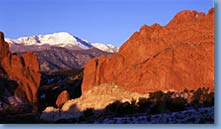
Today (following the Seahawk's loss) I found encouragement and consolation by getting out and enjoying the beauty's of God's creation. I'm half joking, half serious. Monday is my day off, and I try to make it restful and refreshing even if it is busy. Today was a perfect example. It's 10:40 p.m. Today I ran and hiked up to Heather Lake (see photos - I took them today), took down my Christmas lights, mowed my lawn, took some things to a thrift store, had some friends over, and even did my taxes. A busy "Sabbath" if you could call it that. But I feel at peace -- having done things that I needed to do, but also taking time to enjoy life. I share this with you to keep in touch with you -- whoever would care to read this. Read the link attached to the heading of this blog of you want to read the "truth" about the Seahawks game. Blessings to you! I'll write a "real blog" later this week.

Thursday, February 02, 2006

The Humility Fallacy

"As a prisoner for the Lord, then, I urge you to live a life worthy of the calling you have received: Be completely humble and gentle; be patient, bearing with one another in love. Make every effort to keep the unity of the Spirit through the bond of peace. There is one body and one Spirit -- just as you were called to one hope when you were called -- one Lord, one faith, one baptism; one God and Father of all, who is over all and through all and in all." Ephesians 4:1-6

Self-promotion and ego. False humility and pride. Self-esteem and self-deprecation. We have been taught that "pride" is the root of all sins. Yet pride still rears its ugly head as we compare ourselves to others. We seek validation by what other people say. Humility is lost the moment we declare "pride has been conquered.” Leaders shamelessly boast about who they are, what they’ve done and how their ideas will change the world. (They even create their own websites and blogs to espouse their ideas :))Mini-empires are built as God looks on.

What is it to be "completely humble"? I have often chuckled while reading the words that Moses wrote about himself in Numbers 12:3 “Now Moses was a very humble man, more humble than anyone else on the face of the earth.” I’m not questioning the truth of Scripture, but I can’t help but see some irony in the statement.

Is humility a flagellation of oneself over the past and the present? Is it craving compliments yet outwardly rejecting them?

I liked the conclusion we came to today. Humility is the state of having a proper view of oneself. Someone else defined it this way: Humility is having a true view of who God says you are.

The above passage in Ephesians is preceded by three chapters that define who we are, what we’re worth, what we’re created for and who we belong to. Knowing these things keep us humble. They help me be at peace as I cease from striving to please everyone. It puts “me” into perspective as one of God’s children while giving me a greater view of others. It allows me to be obedient and to do my best without it becoming a boast. In Christ I find peace, patience, hope and faith. These come from knowing where my address is.